From Startup Nation Design Constraints to the Pursuit of Luxury Living
Israel was born out of urgency. In its earliest decades, the country operated in survival mode—focused on efficiency, speed, and resilience. This mindset shaped everything from technology and infrastructure to housing and architecture. Buildings were designed to solve immediate problems: to accommodate growing populations quickly, maximize limited land, and function under constraint. Lifestyle, spatial generosity, and experiential quality were secondary concerns.
As a result, much of Israel’s early residential architecture feels awkward by today’s standards. Homes were compact, rooms were small, ceilings were low, and layouts prioritized function over experience. Natural light, flow, and spatial comfort were often sacrificed in favor of efficiency. Architecture reflected a nation in startup mode, innovative and resilient, but not yet settled.
Today, that reality is changing. Israel has matured economically, culturally, and socially. Families are no longer building purely out of necessity; they are building to live well. There is a growing desire for space, light, privacy, and quality of life—values once considered luxuries, but now understood as essentials. This evolution is visible across the country, and especially in Jerusalem, where older buildings—designed for a different era and mindset—are increasingly being demolished or reimagined to make way for new architecture.
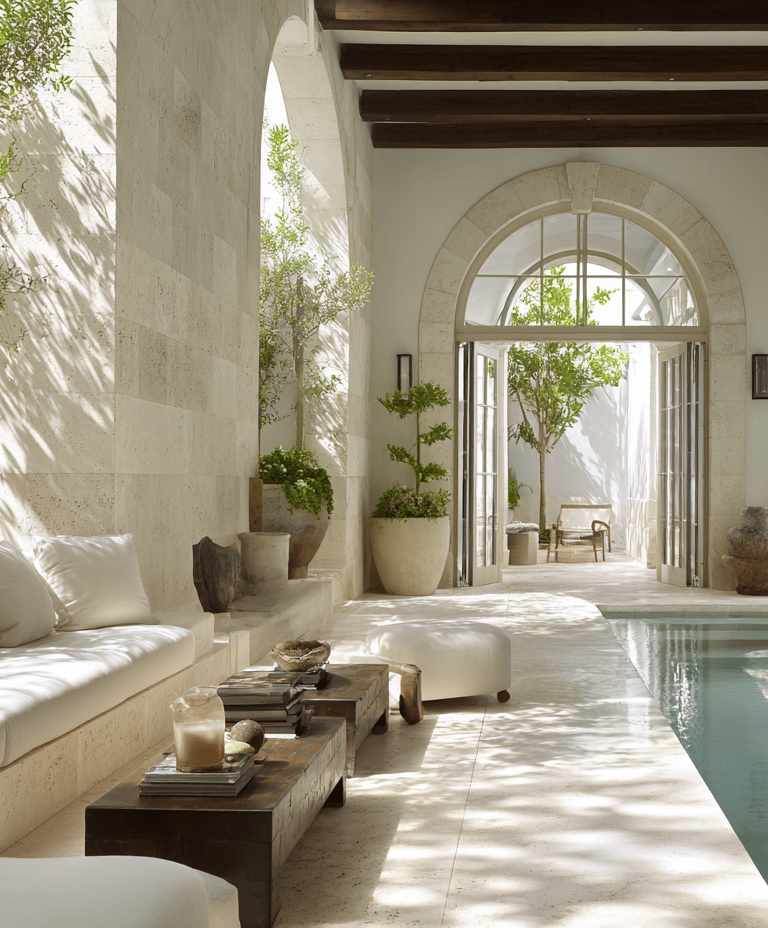
In their place, a new design language is emerging. One that embraces open-plan living, generous kitchens, indoor–outdoor connections, private gardens, home offices, and homes designed around family life rather than mere accommodation. This shift marks more than a change in style; it signals a deeper cultural transformation.
For English-speaking families arriving from abroad—from South Africa, the United States, the United Kingdom, Australia, and beyond—this transition can feel both exciting and frustrating. Many are accustomed to living environments defined by space, natural light, and effortless flow. When confronted with traditional Israeli housing, something often feels missing. The potential is there, but the design thinking has not always caught up.
What must evolve alongside Israel’s physical transformation is the architectural mindset itself.
Much of architectural education in Israel is still rooted in the same constrained thinking that shaped the early Startup Nation. Students are often trained to optimize, compress, and work within tight limits—recreating familiar typologies rather than imagining new spatial possibilities. Architecture is experiential by nature; designers tend to recreate what they know. When one grows up in compact homes with limited spatial generosity, it becomes difficult to imagine architecture beyond those boundaries, no matter how advanced the tools or technologies may be.
Designers who have lived outside of Israel are therefore uniquely advantaged. Having experienced international standards of living—where openness, light, proportion, and spatial flow are fundamental rather than optional—they bring back a lived understanding of space. This is not theory; it is experience. Open space, in this sense, is not a stylistic preference, but a cultural condition. It shapes how families gather, how children grow, how work integrates into home life, and how architecture supports wellbeing.
This shift in mindset is critically important because it directly impacts the practice of architecture and the way design evolves over time. When architectural thinking remains confined within a single cultural or geographic framework, innovation slows and design becomes repetitive. Buildings begin to replicate familiar patterns rather than respond to new aspirations. For a country that has matured and is still defining its future identity, this limitation no longer reflects the ambitions of its people.
This is why engaging a design leader who can think beyond the borders of Israel is essential—particularly when developing landmark or name architectural projects. These projects do more than provide accommodation; they set benchmarks. They influence future developments, redefine expectations, and contribute to the architectural identity of a city and a nation. They demand architects with a broad, international design vocabulary who can elevate projects beyond convention while remaining deeply respectful of local context.
This is where our boutique residential architecture studio plays a critical role.
As a South African–trained architect now deeply rooted in Jerusalem, I understand both the history and the future of Israeli architecture. I respect the constraints, regulations, and cultural realities of building in Israel, while bringing an international design mindset shaped by European, Australian, American, and South African influences. My work bridges Israel’s startup past with its emerging maturity—translating global standards of luxury, comfort, and spatial intelligence into homes that are deeply rooted in place, yet unmistakably contemporary.
This architectural shift reflects something far deeper than design trends. It marks a nation stepping confidently into its next chapter: from efficiency to generosity, from density to openness, from survival to sovereignty of lifestyle.
This is the architecture of the Maturing Lions of Judah—strong, grounded, and no longer constrained by necessity, but guided by vision.
Discover what our clients say about our architectural services and designs.
The team at Jerusalem Architects transformed my vision into a stunning reality.
Sarah Johnson


Jerusalem
Working with Jerusalem Architects was an incredible experience; their attention to detail and creativity exceeded our expectations for our home renovation project.


Michael Lee
Tel Aviv
★★★★★
★★★★★
Curated network of designers.
Jerusalem Design Architects
jason@jerusalemarchitects.com
© 2025. All rights reserved.